01Simulation
OneNeuron
A neuron on the workbench
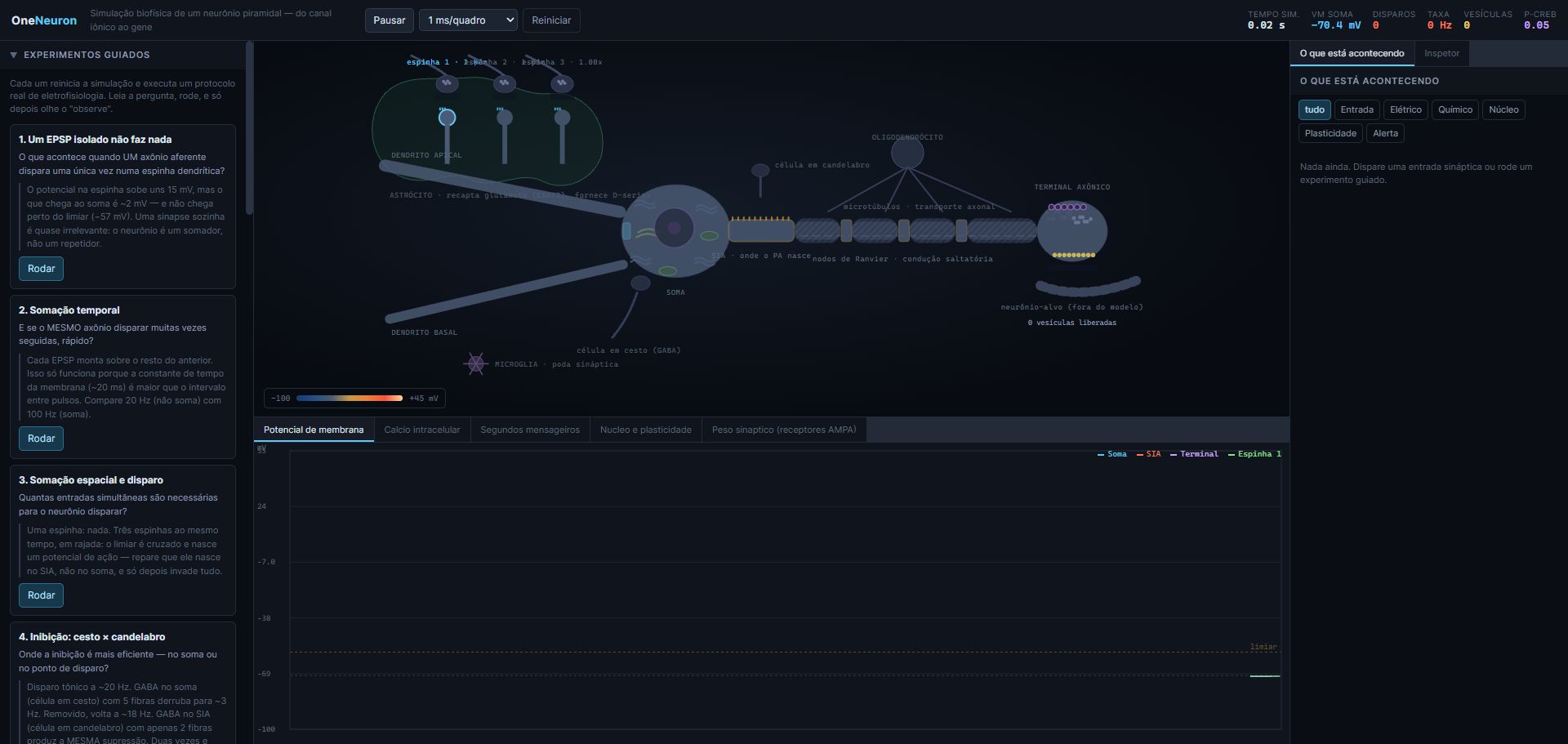
OneNeuron simulates a neuron with eleven compartments. You can apply a pulse to the cell body and follow the signal to the axon terminal.
Why I built it
Working with language models, I got curious about the biological inspiration behind neural networks. To understand a network, I wanted to start with the neuron: what happens when it receives a stimulus? I started from the chapter on neural sciences and functional neuroanatomy in Kaplan & Sadock’s Synopsis of Psychiatry and gradually built a visual tool to follow what I was studying. It is a study project, done in my free time.
What happens after a pulse?
- pulse
- AIS
- Terminal
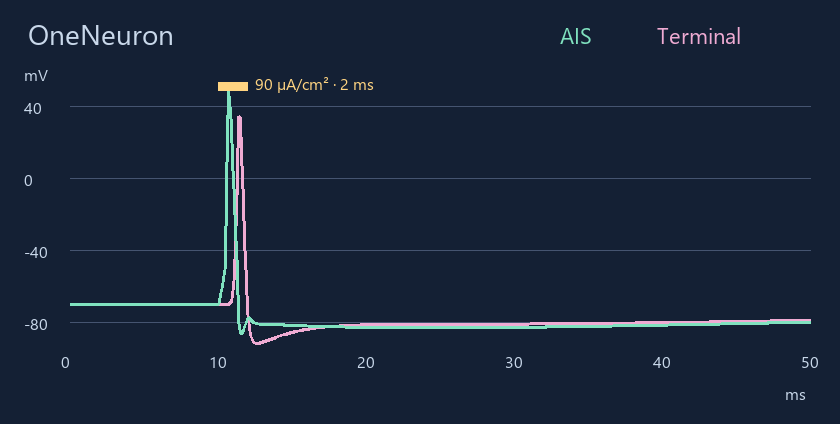
The yellow bar marks a 2 ms pulse applied to the cell body. The green trace shows the spike in the axon initial segment (AIS). The pink trace shows the signal reaching the terminal.
What the model simplifies
The cell has a fixed geometry of eleven compartments. The parameters were chosen to explore mechanisms, and some chemical reactions run on accelerated timescales. Terminal release is expressed as an average number of vesicles. The traces describe the behaviour of this educational model.
What the model computes
- Current in the cell body
- Voltage along the axon
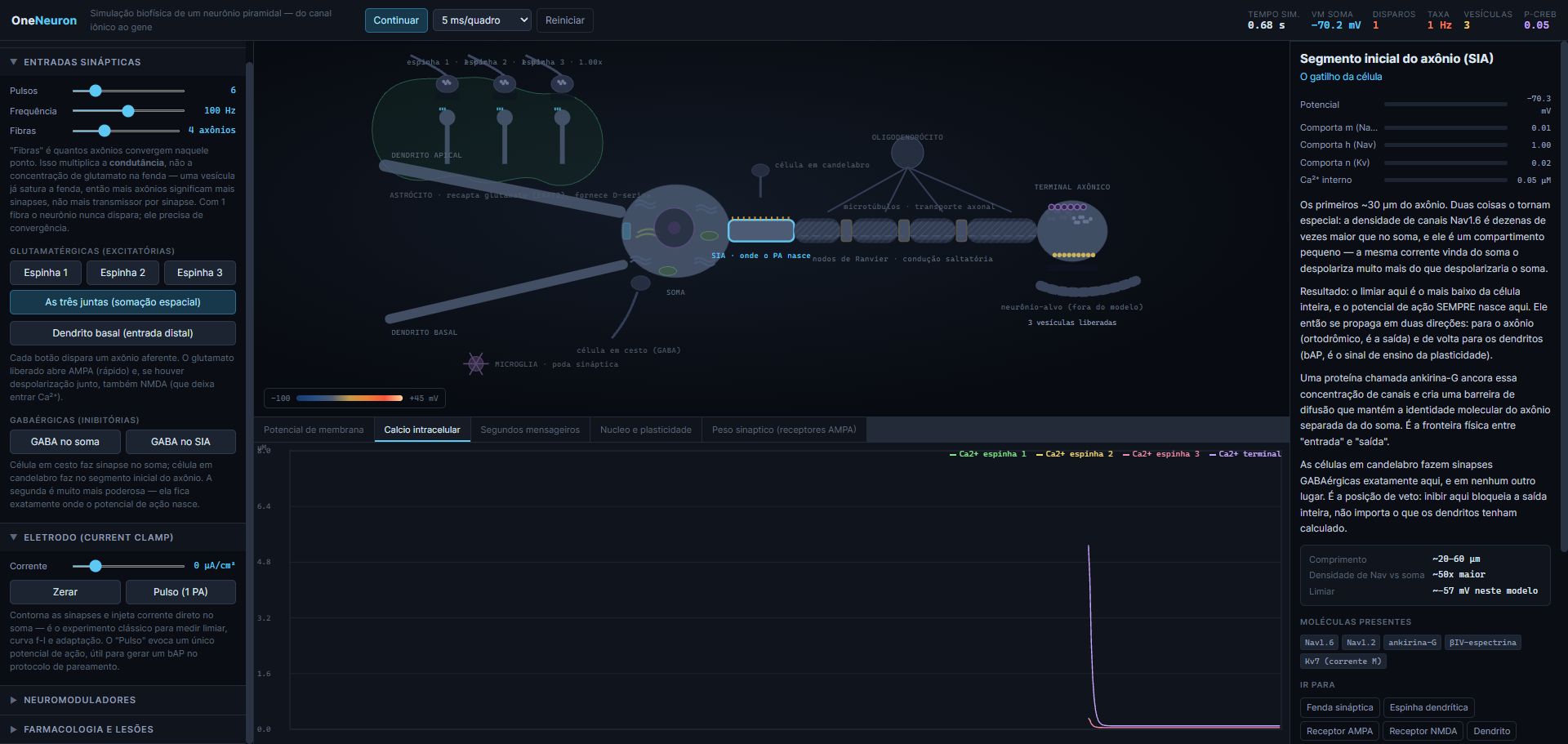
- Calcium and terminal release
Inside the lab
 (enlarge image)
 (enlarge image)